

Middlesbrough boasts a lengthy list of legends from the club’s rich history. Boro have witnessed a raft of multiple England internationals and some of the game’s finest players.
The ups and downs that add colour to Middlesbrough’s history as a club have also made legends who live long in the Riverside Stadium’s faithful hearts. From George Camsell, who scored a club record of 345 goals in his 14-year spell, to Wilf Mannion, a regular England international.
Modern-day icons like Gareth Southgate have also engraved their names in history. So, Boro News has taken a look at some of the very greatest Middlesbrough legends of all time.
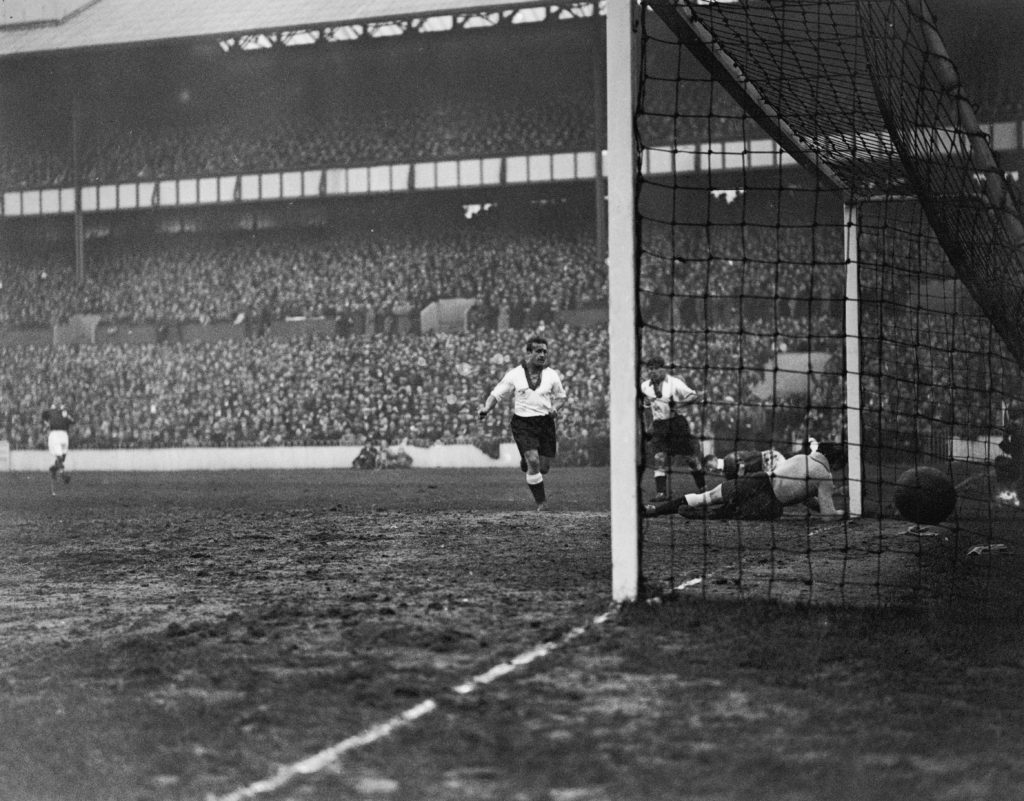
George Camsell
| Position: | Centre-forward |
| Appearances: | 453 |
| Goals: | 345 |
| Managers: | Herbert Bamlett (1925-1927), Peter McWilliam (1927-1934), Wilf Gillow (1934-1935) |
| Years at Middlesbrough: | 1925-1939 |
The Middlesbrough all-time scorer is the first to make the list. Camsell made goals look easy in his 14-year spell at Boro.
Originally playing for Durham City, his eye for goal caught the attention of Middlesbrough who brought the striker for £500 in October 1925. While it took a bit of time for him to settle, Camsell soon hit form and became unstoppable for Boro.
In the 1926/27 season, Camsell broke the record for the most goals in a season. He netted 59 league goals in 37 games and a total of 63 in all competitions. This feat has only been beaten once in England. Camsell was also an England international, netting 18 times from nine caps, giving him the highest goals-to-game ratio of anyone who has played more than a single game.
By the end of his career, Camsell had netted 24 hat-tricks, including a record nine in a single season. He had also scored 345 times for Boro, which still makes him their record goalscorer by a distance.
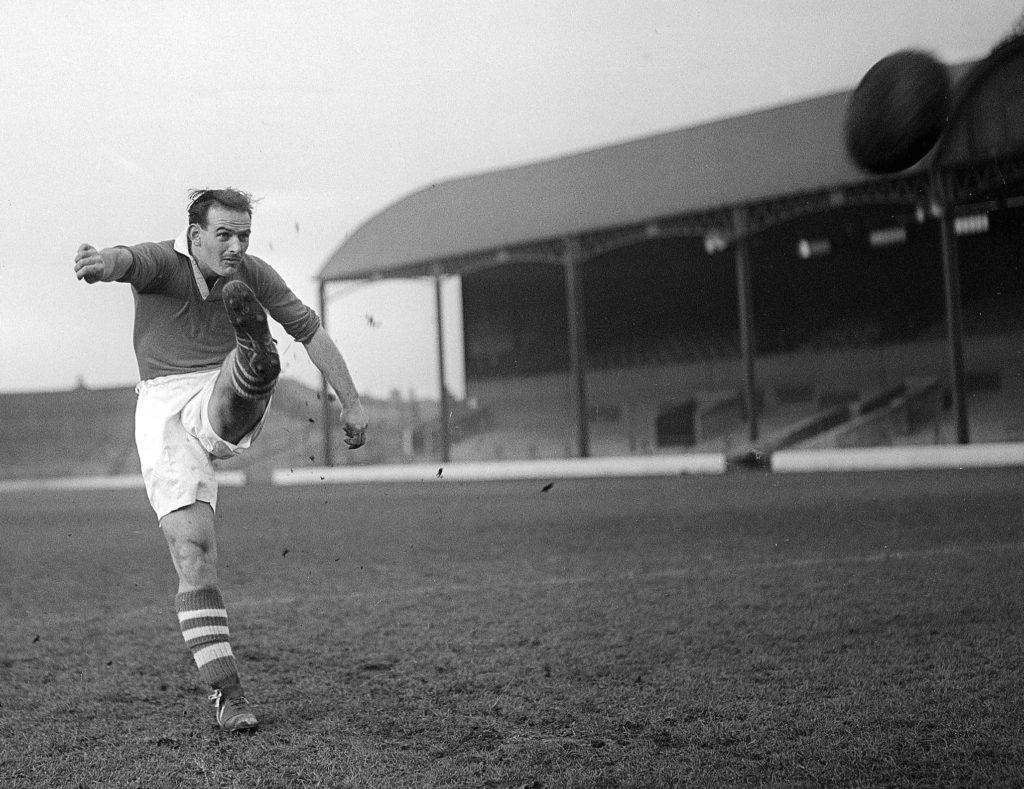
George Hardwick
| Position: | Left-back |
| Appearances: | 143 |
| Goals: | 5 |
| Managers: | Wilf Gillow (1937-1944), David Jack (1944-1950) |
| Years at Middlesbrough: | 1937-1950 |
A true leader and a gentleman, Hardwick was truly one of the world’s best players when he was taking to the pitch in Middlesbrough colours.
At Boro, he broke into the team as a teenager before the war and never looked back. His ability on the left continued to cause all sorts of problems for wingers with few being able to get past him.
This eventually saw him called up to the England squad. Here, Hardwick won 13 caps and was captain of the squad for everyone, the only player to ever achieve this. However, perhaps his most impressive achievement was in 1947.
The Nations of Great Britain formed together to face the rest of Europe at Hampden Park. Hardwick was the captain of the hosting nation and led them to a 6-1 victory.
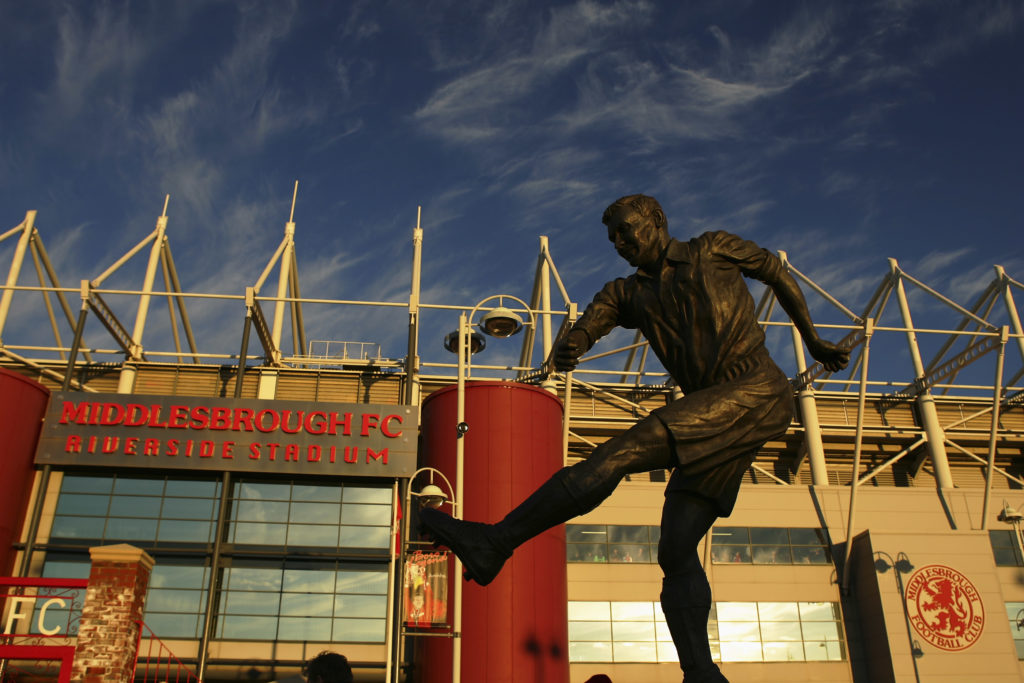
Wilf Mannion
| Position: | Inside-forward |
| Appearances: | 341 |
| Goals: | 99 |
| Managers: | Wilf Gillow (1936-1944), David Jack (1944-1952), Walter Rowley (1952-1954), Bob Dennison (1954) |
| Years at Middlesbrough: | 1936-1954 |
As an inside-forward Mannion terrorised defences throughout his magical career at Boro. He joined his hometown club in 1936 and gradually made his way into the first-team squad. After establishing himself as an upcoming star, his career came to a halt when he was drafted for World War Two.
Mannion fought in France and Italy during the conflict and returned to Middlesbrough after the war. He then quickly found himself in the England squad and scored a hat-trick on his debut against Northern Ireland.
The attacker briefly went on strike in the late 1940s after his request to leave the club was denied. However, he returned in 1949 to help rescue Boro from a potential relegation into the Second Division.
Mannion played for Middlesbrough until 1954, scoring 99 times. He also collected the most England caps of any Middlesbrough player, earning 26 which saw him score 11 times.
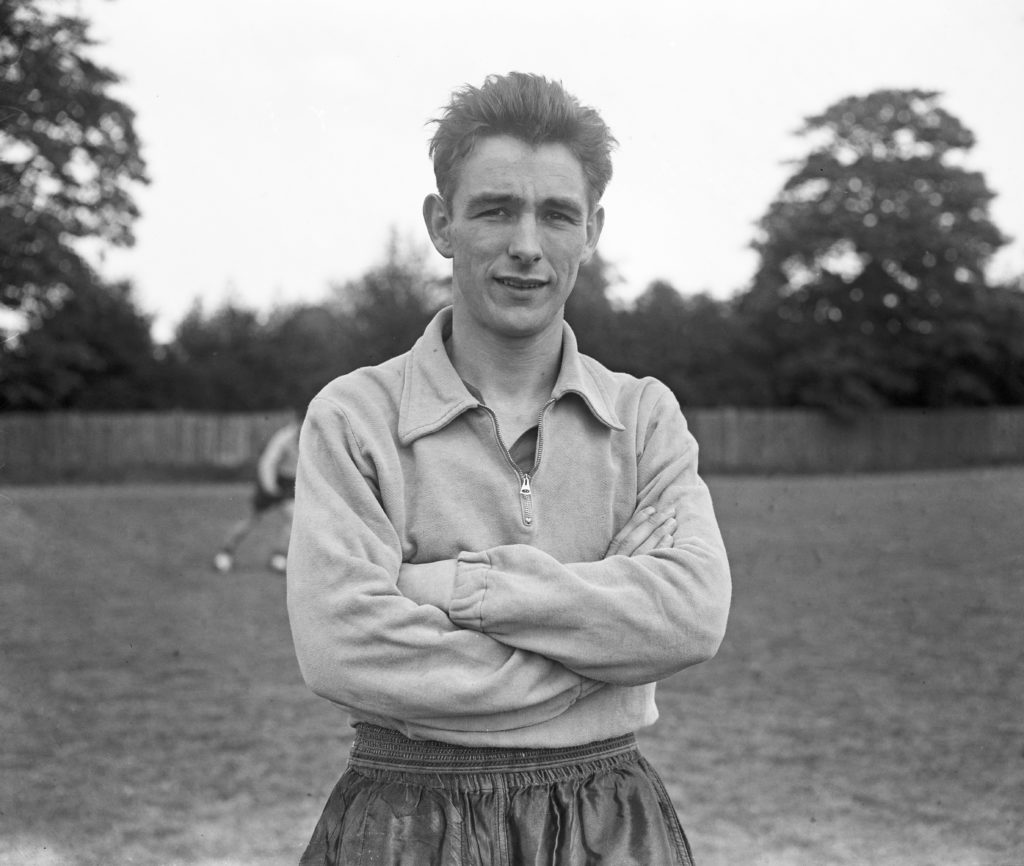
Brian Clough
| Position: | Centre-forward |
| Appearances: | 222 |
| Goals: | 204 |
| Managers: | Bob Dennison (1955-61) |
| Years at Middlesbrough: | 1955-61 |
While Clough is well-known for his sensational managerial career, his playing time was equally special. Playing for his hometown club Middlesbrough, Clough scored goals for fun in his six-season spell at the club.
In four of his six campaigns, Clough netted 40 goals or more. Two of these seasons resulted in him being the Division Two top scorer.
However, despite his prolific record, Boro could not find a way out of the second tier. This resulted in Clough regularly submitting transfer requests due to Middlesbrough’s leaky defence. In his time at Boro, he also earned two England caps and met Peter Taylor, a goalkeeper at the time, whom he would form a successful managerial partnership with in the future.
In 1961, Clough finally left the club to move to local rivals Sunderland. Here, he enjoyed a good two seasons before an injury ended his playing career and he was forced to retire in 1964.
John Hickton

| Position: | Centre-forward |
| Appearances: | 415 |
| Goals: | 159 |
| Managers: | Stan Anderson (1966-1973), Harold Shepherdson (1973), Jack Charlton (1973-1977), John Neal (1977-78) |
| Years at Middlesbrough: | 1966-1978 |
Another deadly goalscorer at Middlesbrough, Hickton had no trouble finding the back of the net. After starting his career out at Sheffield Wednesday, Stan Anderson quickly saw the potential in the striker and brought him into the club.
His eye for goal helped the club regain their First Division status under Jack Charlton with Hickton scoring goals for fun in his long career at Teeside. With Middlesbrough only buying the striker for £20,000, it is often cited as the best £20,000 they ever spent.
By the time Hickton left Boro, he had netted 159 times in 415 appearances. This makes him the club’s fourth all-time top goalscorer. Hickton also ranks third in all-time appearances for Middlesbrough.
Willie Maddren

| Position: | Defender |
| Appearances: | 293 |
| Goals: | 19 |
| Managers: | Stan Anderson (1969-1973), Harold Shepherdson (1973), Jack Charlton (1973-1977), John Neal (1977-79) |
| Years at Middlesbrough: | 1969-1979, 1984-86 |
A man who was a brick wall at the back, Maddren became a legendary figure at Middlesbrough thanks to his career not only as a player but a manager. Starting off at Boro as a striker, by the 1970/71 season, Maddren converted to a defender.
Partnered with Stuart Boam, Middlesbrough struggled to get out of the Second Division under Anderson. After he left in 1973, Charlton helped secure the club’s promotion in the 1973/74 season. This was much down to the abilities of Maddren who helped Boro keep 25 clean sheets in 42 games, while only conceding 30 goals overall on their way to second place.
However, despite a glittering start to his Middlesbrough career, Maddren was forced to retire in 1979 after a persistent knee injury. He made a total of 293 appearances, scoring 19 goals.
Maddren would return to Boro as part of the coaching staff, becoming Charlton’s assistant in 1984. At the start of the 1984/85 season, he became Middlesbrough’s manager. However, this was not successful as the club avoided relegation to Division Three on the final day. Maddren was sacked 13 games into the following campaign.
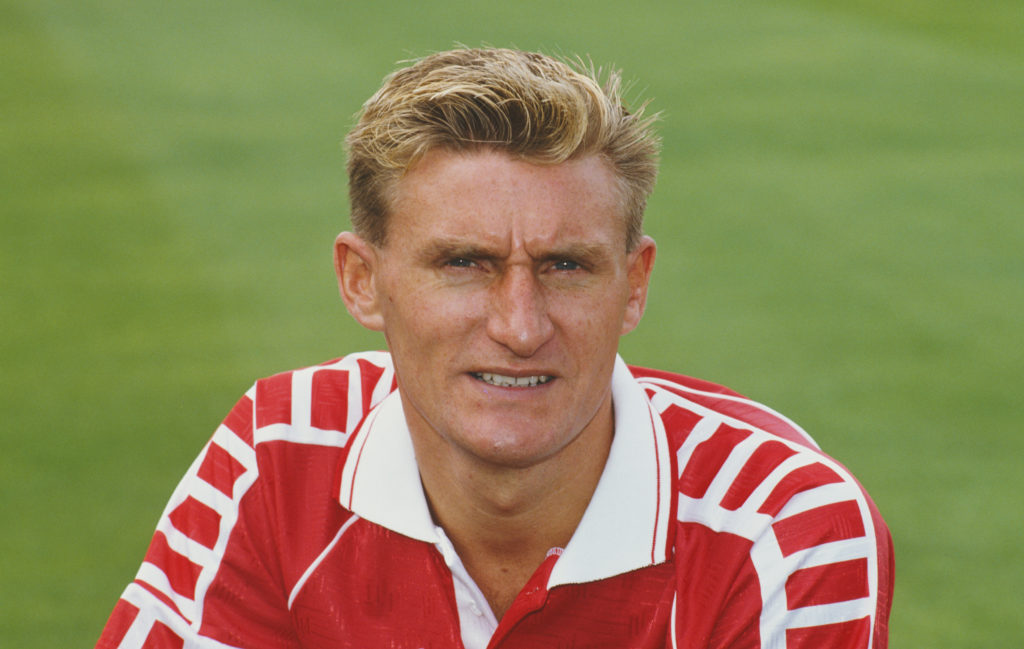
Tony Mowbray
| Position: | Defender |
| Appearances: | 424 |
| Goals: | 30 |
| Managers: | Bobby Murdoch (1982), Malcolm Allison (1982-1984), Jack Charlton (1984), Willie Maddren (1984-1986), Bruce Rioch (1986-1990), Colin Todd (1990-91), Lennie Lawrence (1991) |
| Years at Middlesbrough: | 1982-1992, 2010-2013 |
Another local lad who rose to fame at Boro. Mowbray came through the ranks at one of the worst times in Middlesbrough’s history. The club were struggling off and on the pitch with the existence of the club at stake.
Mowbray was named captain of the side in 1986 with the club in the Third Division. With owner Steve Gibson able to save the club off the pitch, Mowbray led them to glory on it. Mowbray captained Middlesbrough back to the First Division in two seasons and was affectionately known as ‘Mogga’.
In all competitions he made 424 appearances for Boro, scoring 30 goals before departing for Celtic in 1991 for £1 million.
Mowbray would later return to Middlesbrough as a manager in 2010. Under his guidance, they managed to survive relegation, having joined the club when they were 22nd. In his first full season, Boro just missed out on the playoffs, finishing seventh. Mowbray would later be sacked in October 2013 after a poor start to the 2013/14 campaign.
Bernie Slaven

| Position: | Centre-forward |
| Appearances: | 381 |
| Goals: | 146 |
| Managers: | Willie Maddren (1984-86), Bruce Rioch (1986-1990), Colin Todd (1990-91), Lennie Lawrence (1991-1993) |
| Years at Middlesbrough: | 1985-1993 |
Starting his career off in Scotland, Slaven joined Middlesbrough on trial in 1985 and impressed in a friendly against Bradford. As a result, he moved to Teesside from Albion Rovers to start his magnificent career at Boro.
After the club survived liquidation in 1986, Slaven became a key part of Middlesbrough’s squad as they achieved back-to-back promotions from Division Three to Division One. In this run, the striker netted a combined 46 goals across the two seasons. In the playoffs, he netted past Bradford City in the semi-finals before getting a vital assist against Chelsea in the final.
Middlesbrough’s return to the top-flight was not successful and they were relegated in their first season back despite Slaven netting 15 times in the league. Three years in the second tier followed where the striker scored another 70 goals.
The 1991/92 campaign saw Slaven score 18 times, helping Middlesbrough return to the top-flight, now the Premier League, after finishing second.
Slaven became the Premier League’s first Irish goalscorer when he netted a brace in a 2-0 victory over Manchester City. The Irishman would then leave and join Port Vale on a free in March 1993 after a falling out with then-manager Lennie Lawrence.
Juninho
| Position: | Attacking Midfielder |
| Appearances: | 152 |
| Goals: | 34 |
| Managers: | Byran Robson (1995-1997)(1999-2000), Steve McClaren (2002-2004) |
| Years at Middlesbrough: | 1995-1997, 1999-2000, 2002-2004 |
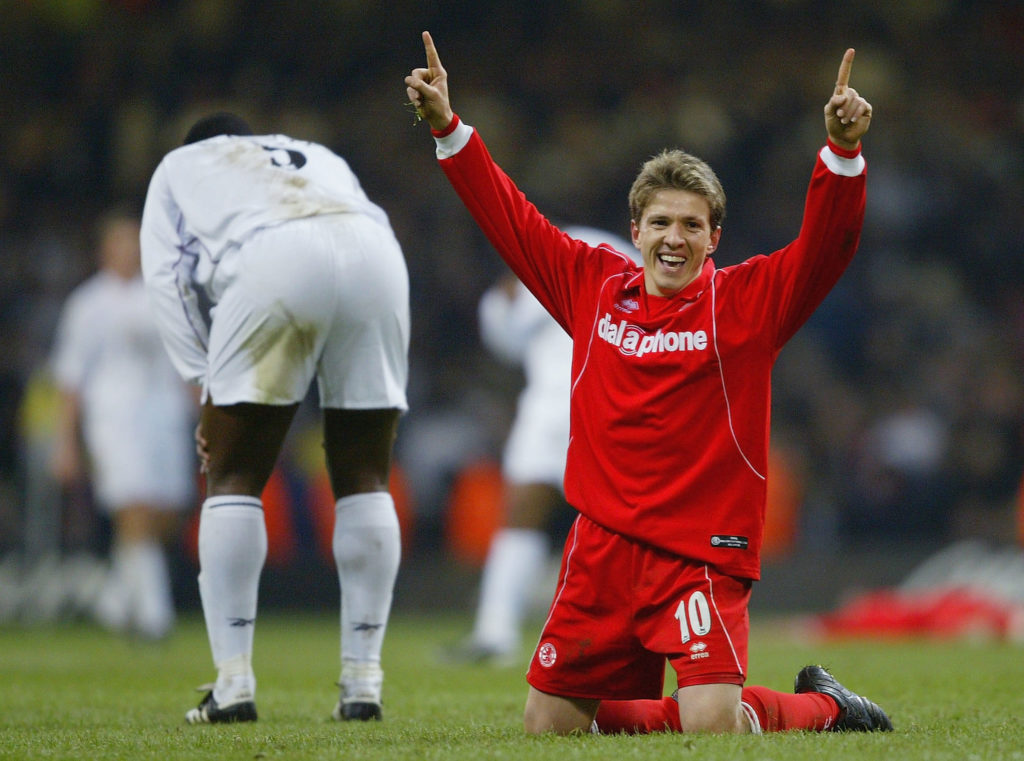
Upon Middlesbrough’s promotion back to the Premier League in the 1994/95 season, the club signed Juninho for £4.75 million. The Brazilian international was sensational at Boro and was nicknamed the ‘The Little Fella’. In his first spell at the club, he helped the club reach both the League Cup and FA Cup finals before he left after Boro’s relegation in 1997. Despite Middlesbrough’s drop, he came runner-up in the FWA Player of the Year award.
Juninho briefly returned to Boro on loan from Atletico Madrid in the 1999/2000 season after their return to the Premier League. Here, he helped guide them to a 12th-place finish.
However, his third spell at the club cemented him as a Boro legend. Juninho returned to Middlesbrough in 2002 for £6 million. In his first two years back at the Riverside Stadium, he helped to lift Boro’s first-ever major trophy as they won the League Cup in 2004. In 2007, he was voted as Middlesbrough’s greatest-ever player due to his success. Juninho then finally left the club for Celtic in 2004.
Gareth Southgate

| Position: | Centre-half |
| Appearances: | 204 |
| Goals: | 4 |
| Managers: | Steve McClaren (2001-2006) |
| Years at Middlesbrough: | 2001-2009 |
The man who helped oversee Middlesbrough’s golden era, Gareth Southgate led Boro through the the heights of the club. Joining in 2001 as Steve McClaren’s first signing, he was soon appointed captain after Paul Ince left in 2002.
In 2004, he led the club to their only major trophy after Middlesbrough defeated Bolton in the League Cup final. Southgate then stayed at Boro for the final years of his playing career before taking over as manager in 2006.
Southgate spent three-and-a-half seasons as manager at the Riverside Stadium and famously saw his team beat Manchester City 8-1. However, his third season did not go to plan and he oversaw Middlesbrough’s relegation into the Championship. Southgate was then sacked in October 2009 with the club sitting fourth.
However, he would return to Middlesbrough later in his managerial career as England manager. The national side used the stadium and training facilities for friendlies against Austria and Romania in 2021.