


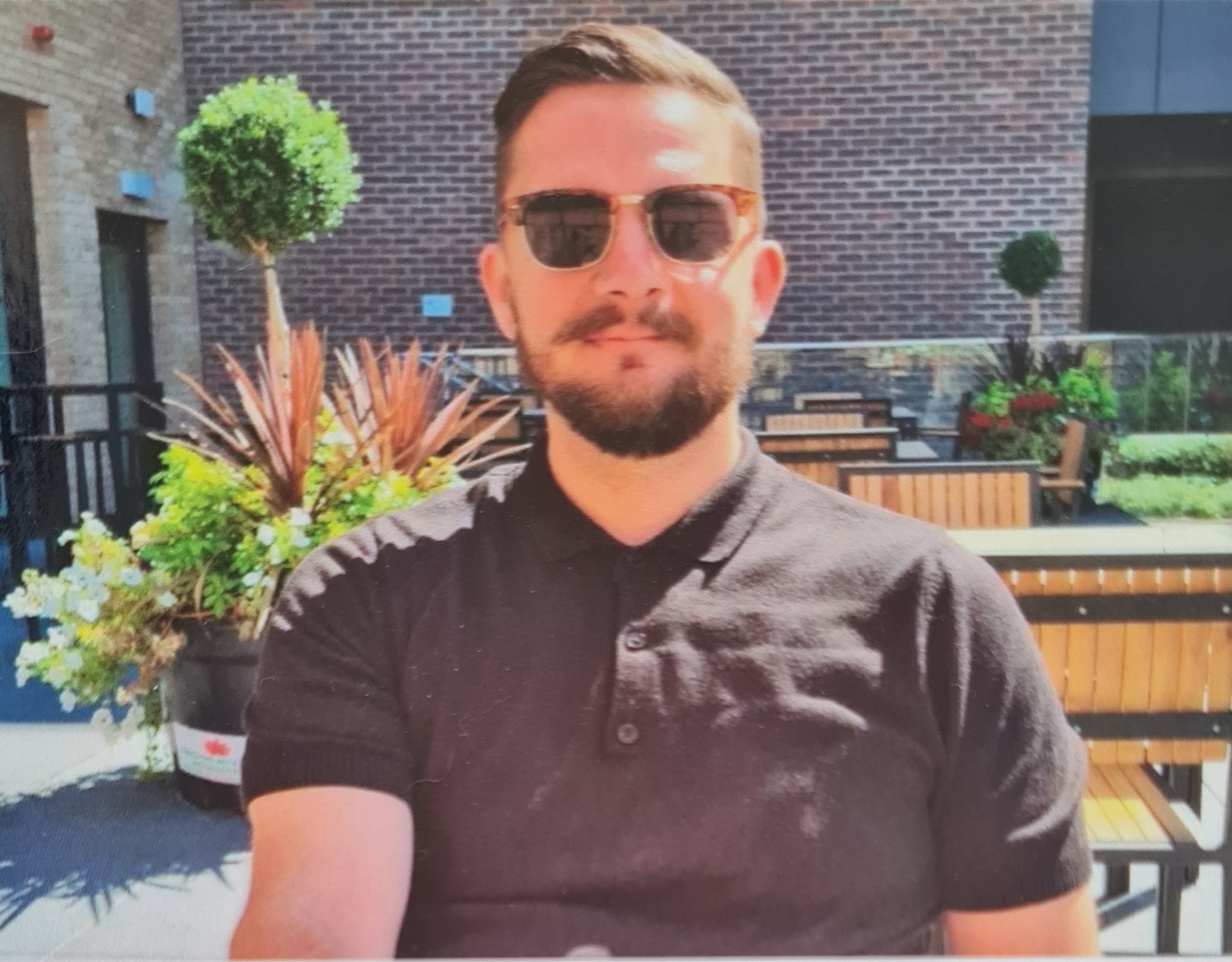

When Chris Freestone arrived at Middlesbrough, he could never have imagined he would be rubbing shoulders with Champions League winners and top internationals, but the transformation from The Northern Counties League to The Premier League was a wild journey.
The striker who was plucked from Nottinghamshire club Arnold, joined Boro during the 1994/95 season, just as the club were on the cusp of promotion to The Premier League and looking ahead to a move to their brand new home, The Riverside Stadium.
It meant that Freestone-who spent three years on Teesside-was uniquely placed to see the dramatic transformation of the club and the heavy influx of foreign superstars as Boro began to orchestrate a pretty seismic shift in terms of their transfer activity.
Foreign stars joined British based squad
In came the likes of Juninho, Ravanelli and Emerson who joined a mix of British based players who were already at the club from their days at Ayresome Park.
Freestone-whilst praising the domestic players at the club during that time-remembers fondly the influence of the overseas contingent who joined the squad in the mid-nineties. “Don’t get me wrong, the English players we had, Nigel Pearson, Steve Vickers, even the Scottish players Derek Whyte, the Irish players like Curtis Fleming, they were fantastic, they were the back-bone of the club, they were solid.” Said the ex-Boro man.
“There was still that sort of English culture of banter, having a laugh, having a joke, being a family. All that sort of stuff was great, but the foreign players that came in; the likes of Juninho and Emerson, Rav when he first came in, Mikkel Beck, Jan Fjortoft, all of those players when they came in, it just took the club to another level.
“The professionalism, the way we ate, the way we trained and looked after ourselves. All of those things are what I took from those sort of guys.”
Forward was keen to learn
Whilst Freestone, a young forward trying to improve and make his way in the game, was keen to learn, he revealed that not all of the Boro squad was on board with the healthy lifestyle that began to infiltrate the pre-existing culture.
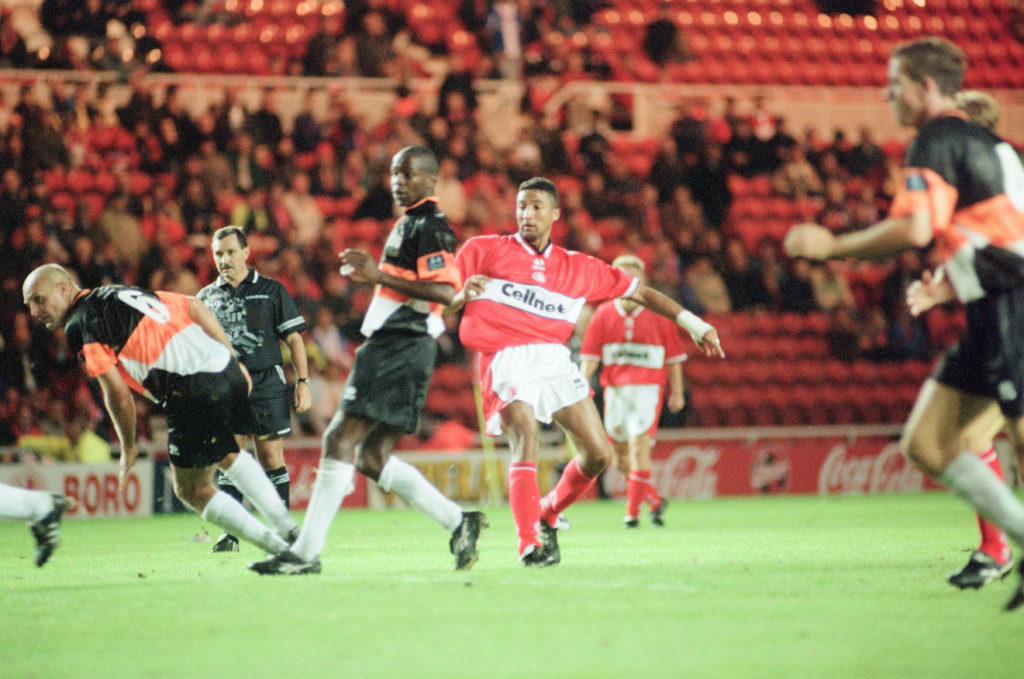
“When I first went there (to Boro), you still had the likes of Clayton Blackmore who was coming to the end of his career. Obviously he had a fantastic career at Manchester United, he was at United with Robbo and was a good friend of the gaffer’s, he could just do what he wanted, you know what I mean?
“So, we’d go down for breakfast, have pre-match meals, all that sort of stuff, I have Jamaican heritage, so bland food is not good for me, but I’m eating like boiled chicken and pasta, which is boring, but it’s good for you and you just do it.
“I look over at Clayton Blackmore and he’s got like a full-English breakfast in the morning, he’s got steak and eggs at lunchtime, I’m going, ‘what the hell is going off here?’ So you’re trying to learn from the foreign influence because you want a long career and then you look at people like Clayton Blackmore, who is at the end of his career and doesn’t care anymore and he’s eating all of that, and if you like a full-English breakfast, it’s a bit disheartening when you’ve got to eat boiled chicken and pasta!”
Captain Nige’s ritual
Elaborating on some of the other cultures and pre-match rituals that still existed during those halcyon days as Boro were put firmly on the map under Bryan Robson, Freestone added, “There was some of that, I roomed with Nigel Pearson a couple of times, he’d have a couple of pints on a Friday night to settle his nerves before he went to sleep and when you’re in a room with the captain, you’ve got to have a couple of pints as well because he wouldn’t drink alone. I was like, ‘I don’t want to drink’, but there was not much choice.”
The striker, who also played at Northampton Town and Hartlepool amongst others, attributed that experience at Middlesbrough as the reason he was able to play professionally for so long. “Learning from the foreign influence in terms of how to look after yourself, how to prepare for games, how to look after yourself after the games, that sort of stuff, I mean, yeah, I’m 52, I can still play now at times so it has obviously held me in good stead over the years of looking after myself and training and all of that.
“If I wouldn’t have done that, if I hadn’t have been with those guys, no chance.”
After hanging up his boots, Freestone went on to work with the English FA as a development coach, attained a UEFA A Licence and has his own Free09coaching website which hosts blogs, reviews and articles on coaching methods.